Introduction
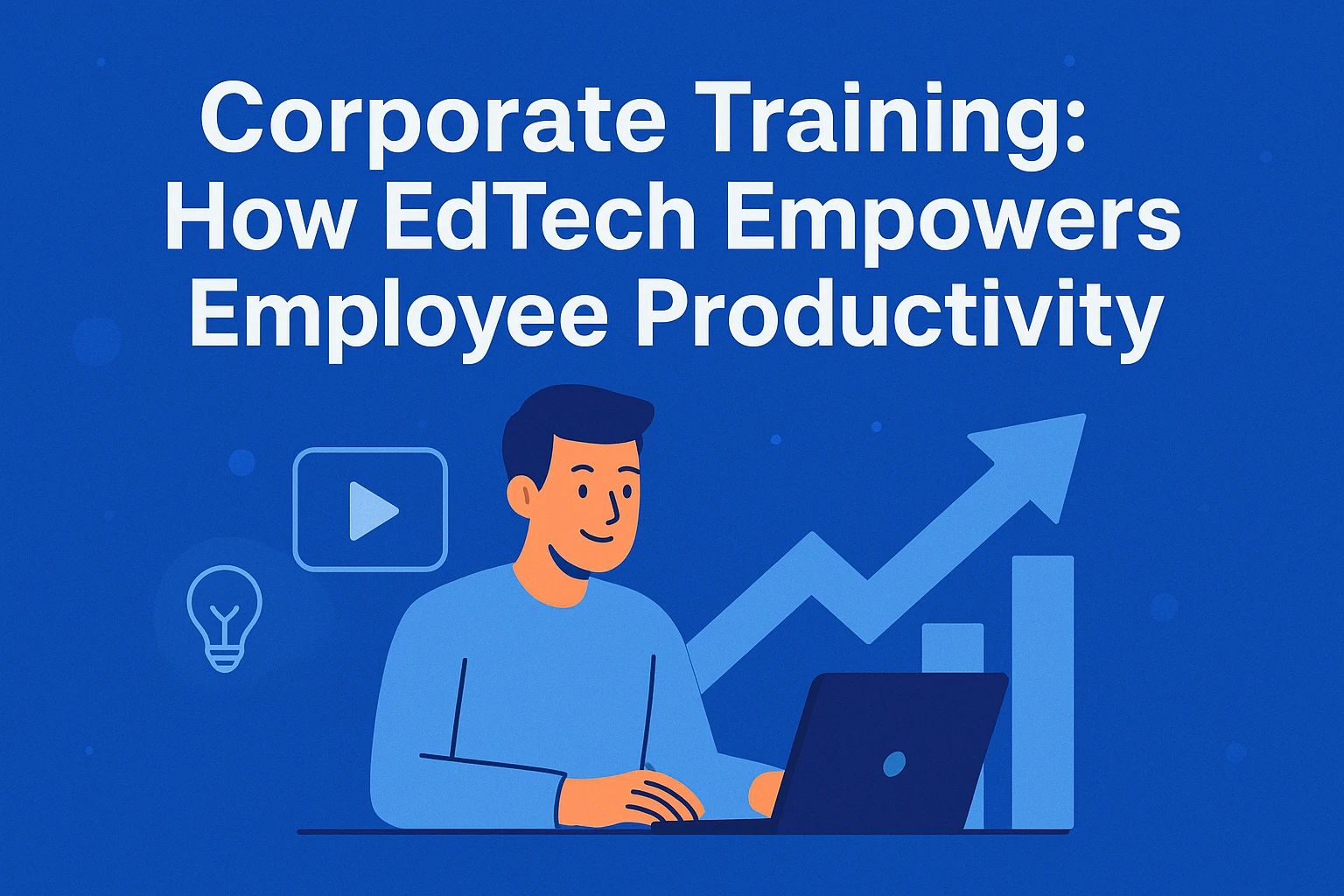
In today’s fast-moving business environment, workforce skills and productivity are key differentiators. Traditional corporate training methods often struggle to keep pace with evolving technologies, shifting roles, and hybrid/remote work models. That’s where education technology (EdTech) comes in: modern digital learning platforms offer organizations the tools to empower employees increasing productivity, reducing time-to-competency, and aligning skills with business goals.
Productivity Gains from Targeted Learning
Research shows that companies investing in well-designed learning & development (L&D) programs see measurable productivity improvements. For example, a survey found that 42% of employers believe productivity levels increase by up to 40% after effective training. New employees reported time-savings of as much as 80% in meeting productivity standards.
This demonstrates that when training is aligned with job-roles and delivered via the right channels, it becomes more than just an “engagement exercise” it’s a strategic productivity lever.
Personalized & Role-Specific Learning Paths
EdTech enables customized learning paths tailored to individual roles, skill gaps, and business objectives. By leveraging data analytics and adaptive platforms, organizations can deliver relevant content to each learner instead of a one-size-fits-all model. This increases relevance, reduces wasted time, and accelerates the ability of employees to apply new skills on the job.
When employees see learning aligned directly with their responsibilities, motivation increases and productivity follows.
Flexible & On‐Demand Delivery
Modern corporate training must fit into the workflow without disrupting productivity. EdTech platforms support mobile learning, micro-learning modules, and on-demand access enabling employees to learn when it makes sense. According to analysis, microlearning can reduce training time while enhancing engagement and retention.
By integrating learning into day-to-day work rather than pulling employees out for lengthy sessions, organizations minimise downtime and maximise output.
Interactive, Engaging, and Data-Driven Learning
Interactive formats videos, quizzes, simulations, gamification help learning stick and drive behavioural change. Combined with data analytics, organizations can monitor progress, identify bottlenecks, and continuously refine training programmes. The EdTech & corporate training market report highlights trends such as learning-on-demand, data-driven personalization, and continuous learning culture.
When training is engaging, measurable and aligned with workflow, it more directly translates to improved employee performance.
Business Outcomes: Retention, Speed, and Cost-Efficiency
Beyond productivity, effective EdTech-based training contributes to broader business benefits: reduced time-to-competency, lower attrition, improved quality of output, and cost savings in talent development. For example, organisations have observed improved delivery quality and quicker ramp-up times for employees following targeted training.
These outcomes strengthen the case for corporate training as a strategic investment rather than an operational expense.
For companies looking to enhance employee productivity in a rapidly evolving workplace, EdTech offers a powerful toolkit. From personalised, on-demand learning to data-driven measurement and engaging content formats, the right training approach helps employees develop the right skills, faster and apply them effectively. By making corporate learning integral to the workflow, organisations not only boost productivity but also build a resilient, future-ready workforce.
At Surge Swipe, we help enterprises leverage next-gen learning solutions for measurable productivity gains and workplace transformation.